
What are the specific collateral requirements for a high dollar bail bond in southeastern North Carolina?
Securing a high-dollar bail bond in southeastern North Carolina often requires collateral to mitigate financial risk. Learn how assets act as a guarantee to ensure court appearances.
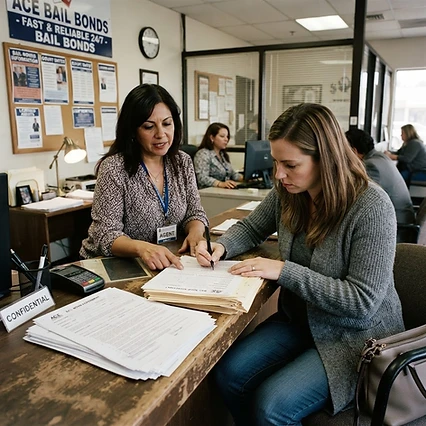
Getting a loved one out of jail is a stressful, time-sensitive situation. When the bail amount set by a magistrate or judge is high, the process can feel overwhelming. In Southeastern North Carolina, securing a "high-dollar" bond often requires more than just a premium fee; it involves collateral.
At Off The Hook Bail Bonds, we believe in transparency. Understanding what collateral is and how it functions in Wilmington and surrounding areas is the first step toward getting your family member home.
What is Collateral in a Bail Bond Context?
In the world of bail bonding, collateral acts as a financial guarantee. When a bail amount is substantial, a bail bonding company takes on a significant level of financial risk. To offset this, the company may require collateral—an asset of value—to ensure that the defendant appears for all their scheduled court dates.
If the defendant fulfills their legal obligations and shows up for every court appearance, the collateral is returned in full once the case is concluded. However, if the defendant fails to appear (commonly known as "skipping bail"), the bond is forfeited to the court, and the collateral may be used to cover the loss.
Why Collateral Matters for High-Dollar Bonds
For smaller bonds, a signature or a premium fee might be enough. But when a judge sets a high-dollar bond, the risk to the bonding company increases exponentially. Collateral serves two purposes:
- Risk Mitigation: It provides security for the surety company.
- Accountability: It gives the defendant and their family a vested interest in ensuring the defendant stays in contact and attends every court date.
In Wilmington and across Southeastern North Carolina, we evaluate each case individually. We look at the nature of the charges, the defendant’s ties to the community, and the specific bond amount to determine what, if any, collateral is necessary.
Common Types of Collateral Accepted
Not every asset qualifies as collateral. We generally look for items that hold verifiable value and can be legally transferred or secured. Common forms of collateral in North Carolina include:
- Real Estate: This is the most common form of security for very high-dollar bonds. It involves placing a lien on a property until the case is closed.
- Cash or Cash Equivalents: Bank certificates of deposit or cashier’s checks.
- Vehicles: Depending on the age, condition, and lien status of the car, truck, or boat, it may be used as security.
- Jewelry or Valuables: Items like gold or precious stones that can be appraised.
The Collateral Process: Step-by-Step
Understanding the timeline helps take the mystery out of the process:
- Assessment: When you contact us, we review the bond amount and the defendant's history. We will let you know immediately if collateral is required.
- Appraisal/Verification: If you are using property or a vehicle, we must verify ownership and clear title. For real estate, this often involves a title search.
- Documentation: We will provide you with a collateral agreement. This is a legally binding contract that outlines what is being held, the conditions for its return, and what happens in the event of a forfeiture.
- Storage or Lien: Depending on the asset, we either store it in a secure location or file the necessary paperwork to place a lien on the property with the county.
- Release: Once the case is resolved—meaning the defendant has appeared for all court dates and the court has discharged the bond—we will promptly return your collateral or release the lien.
Common Pitfalls to Avoid
Navigating a high-dollar bond is complex. Avoid these common mistakes:
- Providing Misleading Information: Always be honest about the status of your assets. If a car has an outstanding loan that exceeds its value, it likely cannot be used as collateral.
- Ignoring Court Dates: The biggest pitfall is failing to keep in touch with your bail agent. If you have an emergency or a conflict, let us know immediately. Communication is key to protecting your collateral.
- Assuming All Bonds Require Collateral: Every case is different. Don't assume you need to put up property until you have spoken with a licensed agent at Off The Hook Bail Bonds.
What to Do Next
If you are dealing with a high-dollar bond in Wilmington, Pender, Brunswick, or New Hanover County, time is of the essence. Don’t try to navigate the legal system alone. Our team at Off The Hook Bail Bonds is experienced in handling complex bond requirements and is here to guide you through the process with integrity and speed.
We are available 24/7 to answer your questions and help you secure the release of your loved one. When you are ready to move forward, contact us immediately to discuss your options.
Reach us at our primary line at 910-232-3401 or our 24/7 emergency line at 858-544-1182. We are here to help you get through this difficult time and get your family member back home where they belong.