
Drug Charges
Trump's Ibogaine Executive Order: What It Means for Addiction Recovery
Trump signed an executive order accelerating research into ibogaine for opioid addiction, alcohol dependence, and PTSD. Here's what it means for Jacksonville and Fayetteville N.C. families.
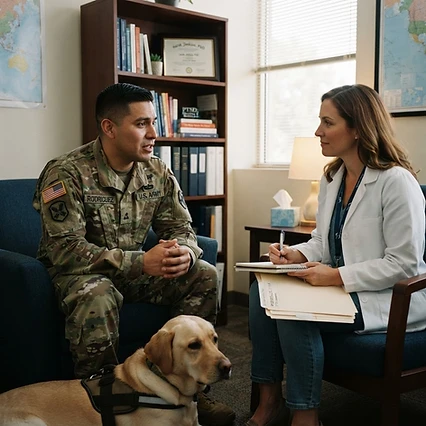
A New Frontier in Recovery: Trump's Executive Order on Ibogaine Research and What It Means for Families Facing Addiction At Off The Hook Bail Bonds, we see firsthand how addiction to opioids, alcohol, and other substances devastates Jacksonville N.C. families. Often, the root cause behind a criminal charge isn't malice — it's a struggle that's been going on far too long, often untreated. It's why we always point toward recovery resources alongside the services we provide. That's also why a major recent development out of Washington, D.C. deserves a closer look here on our blog: President Trump's signing of an executive order aimed at accelerating research and review of psychedelic therapies, including ibogaine compounds. It could represent a meaningful turning point in the fight against opioid addiction, alcohol dependence, and trauma-related conditions like PTSD.
What the Executive Order Does On April 18, 2026, President Donald Trump signed an executive order titled "Accelerating Medical Treatments for Serious Mental Illness," directing federal agencies to ease restrictions and fast-track research into psychedelic therapies, including ibogaine. The official order from the White House states that "psychedelic drugs, including ibogaine compounds, show potential in clinical studies to address serious mental illnesses for patients whose conditions persist after completing standard therapy" ( White House ).
Key elements of the order include:
$50 million in federal funding through the Advanced Research Projects Agency for Health (ARPA-H) to support state-level psychedelic research programs, with states like Texas already investing in ibogaine clinical trials ( CNN ).
A directive to the FDA and DEA to create a pathway for eligible patients who meet Right to Try statutory requirements to access ibogaine and other psychedelic therapies, a framework intended for patients with life-threatening conditions who have exhausted approved treatment options ( CNN ).
An instruction to the Attorney General to initiate reviews for rescheduling (reclassifying) any Schedule I substance that successfully completes Phase 3 clinical trials for a serious mental health disorder ( White House ).
Direct collaboration with the Department of Veterans Affairs to increase clinical trial participation and data sharing, particularly among veterans ( White House ).
Following the order, the FDA announced additional regulatory actions, including issuing National Priority Vouchers for psychedelic candidates like psilocybin and methylone, and — notably — allowing the first FDA-allowed clinical study in the United States of an ibogaine derivative, called noribogaine, as a potential treatment for alcohol use disorder ( FDA ).
This means ibogaine has shifted, in the words of one clinic operator, "from being fringe and underground to being federally acknowledged" ( PBS ).
What Is Ibogaine? Ibogaine is a psychoactive compound extracted from the root of the Tabernanthe iboga shrub, native to parts of Central and West Africa, where it has been used for generations in traditional ceremonial and healing practices, particularly within the Bwiti spiritual tradition of Gabon ( Bwiti Alliance ). Over the last couple of decades, researchers and advocates — including many military veterans — have pointed to anecdotal reports and early clinical studies suggesting that ibogaine may help reduce opioid cravings, alcohol dependence, and symptoms of trauma-related conditions like PTSD ( Nature ).
Currently, ibogaine remains classified as a Schedule I controlled substance in the United States, which is the federal government's most restrictive category, reserved for substances deemed to have no currently accepted medical use and a high potential for abuse ( CNN ). That classification has, until now, made large-scale U.S. research extremely difficult to conduct. As a result, some individuals have traveled to countries like Mexico, where ibogaine clinics operate in a less regulated environment, though this route carries real safety concerns and no FDA oversight ( New York Times ).
The Promise: Addiction, Alcohol, Opioids, and PTSD So what has researchers and advocates hopeful? Let's break it down by condition:
Opioid addiction and withdrawal: Ibogaine has historically been used in some countries to help ease opioid withdrawal symptoms and reduce cravings. Early research suggests the drug may alter certain neural pathways tied to addiction ( CNN ).
Alcohol dependence: With the FDA green-lighting a Phase I clinical trial of noribogaine (an ibogaine derivative) for alcohol use disorder — a condition with high relapse rates and limited treatment options — researchers now have a sanctioned avenue to study this compound directly ( FDA ).
PTSD and trauma in veterans: Advocates have pointed to ibogaine's potential to help veterans dealing with treatment-resistant PTSD, which is why the executive order specifically directs collaboration with the VA and prioritizes veteran participation in trials ( PBS ).
For communities like ours in Jacksonville, which is home to one of the largest concentrations of veterans in the country — roughly 191,400 veterans as of 2023, or about 15% of the regional adult population ( Hampton Roads Regional Planning ) — this kind of research could be particularly relevant. We know from working with families here that the overlap between untreated mental health struggles, substance use, and contact with the criminal justice system is significant. Anything that expands treatment options — real, evidence-based options — is worth paying attention to.
The Risks You Need to Know We would be irresponsible if we painted ibogaine as a miracle cure, because it is not. Serious concerns remain:
Ibogaine has not been approved by the FDA as safe or effective for any condition. Research is still in its early stages in this country ( CNN ).
The drug is known to carry cardiac risks, including abnormal heart rhythms, and has been associated with vomiting and several reported deaths, though it is not always clear whether ibogaine itself, an underlying health condition, or other factors were the direct cause ( CNN ).
FDA Commissioner Dr. Marty Makary has acknowledged that ibogaine could move toward approval only after late-stage clinical trial data is reviewed, and experts have cautioned that $50 million in federal funding may not be sufficient given how expensive large-scale trials are ( CNN ).
This is why the executive order is best understood as a starting point for research — not a green light for self-medication. Anyone considering ibogaine or any psychedelic-based treatment should only do so under the close care of a licensed medical professional, and ideally through a properly supervised clinical trial.
Why This Matters to Us at Off The Hook Bail Bonds We sit at the intersection of a difficult reality. People call us when a loved one has been arrested, and in many cases, the underlying issue is a substance use disorder or untreated mental health condition that was never properly addressed. Bail is about getting someone home and buying time — but real change comes from treatment, counseling, long-term recovery, and community support.
When federal policy shifts in a way that could open the door to new, more effective treatment options for opioid addiction, alcohol dependence, and PTSD, we see a potential path forward for the same families we serve every day. That doesn't mean ibogaine is a finished answer — it means hope is expanding, and research is finally being taken seriously at the national level.
What You Should Do Now If you or someone you love is currently dealing with addiction or a mental health crisis:
Talk to a licensed medical professional before considering any new or experimental treatment. Do not seek out ibogaine or other substances on your own.
Look into local recovery resources in Jacksonville and Fayetteville area. Many clinics, VA programs, and community organizations offer evidence-based treatment today.
Contact us at Off The Hook Bail Bonds if you need help navigating the justice system side of the equation. We can explain your options, post bail, and help you get back to your family so you can focus on what matters most — getting the support and treatment you need.
Addiction and trauma don't have to be the end of the story. With new research like this gaining federal momentum, the door to recovery may open a little wider for people who have been waiting a long time for answers.
This blog post is for informational purposes only and does not constitute medical, legal, or professional advice. Off The Hook Bail Bonds is not a medical provider and does not endorse or facilitate any specific medical treatment. Always consult a qualified healthcare professional before making decisions about treatment for addiction, mental health, or any medical condition.